

Ruth: A Virtuous Woman
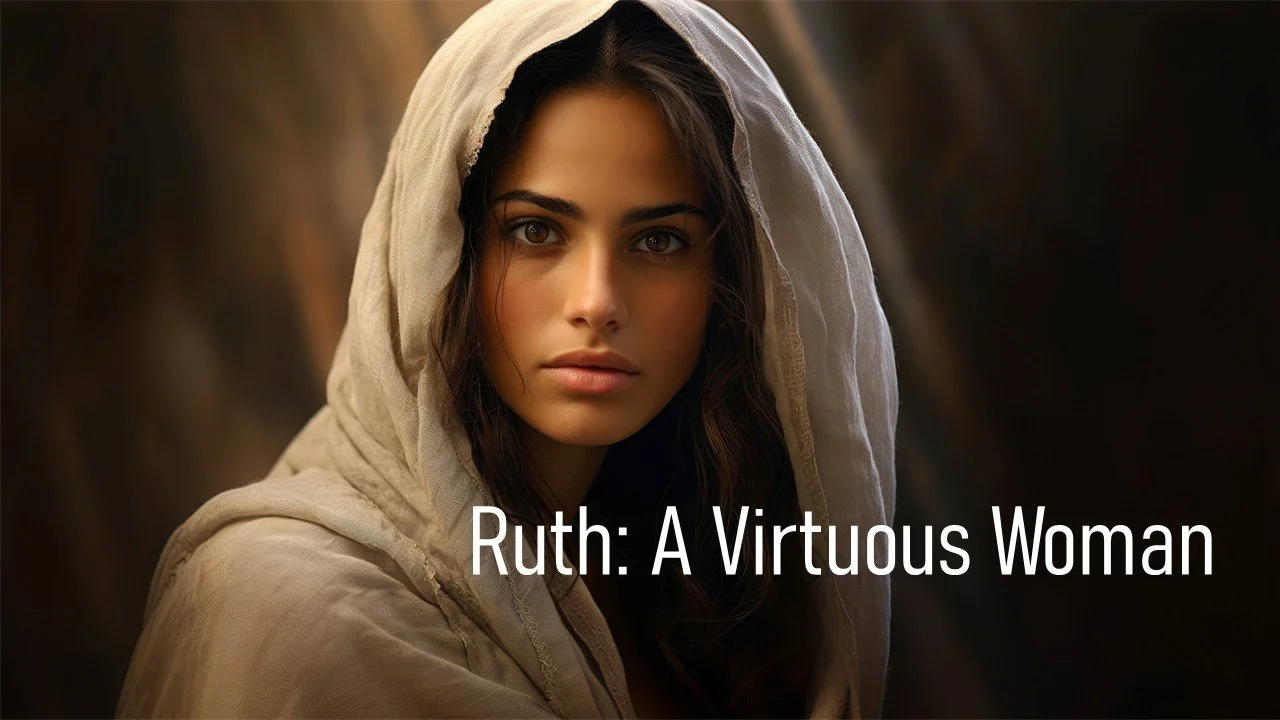
Heroes of the Old Testament - Ruth: A Virtuous Woman
Hello, and welcome to this special edition of In the Lighthouse: your safe harbor from the storm. I’m Daphne Collins, the Lighthouse Keeper, welcoming you back for another epic tale of “Heroes of the Old Testament.” Did you ever ask yourself this question, “How did I get here?” Some of us make definitive plans on how and what we will accomplish in life. We make assumptions about how we will make it happen. When problems arise, we try to mitigate them with the contingencies we set in place just in case. Worldview will likely shape how we navigate the plans we make. If we choose to view things from a biblical worldview, we do so by recalling God’s command to Moses: “Consecrate yourselves therefore, and be holy, for I am holy” (Leviticus 11:44). The truth is, being holy and trying to carry out our plans don’t necessarily go hand in hand. The world rejects our determined adherence to holiness if it conflicts with its agenda. Throughout biblical history, men and women have been lauded for qualities that exemplify their pursuit of righteousness, such as courage, integrity, wisdom, justice, and leadership. These classic “virtues” are demonstrated by their conscious choice to do what is moral and right in their encounters with others. According to the philosopher Aristotle, “Being virtuous is about achieving personal excellence and living in harmony with reason.” In their engagement with others, the virtuous person can be relied upon to act with decency, treat others with respect, and uphold their principles, even when it’s difficult. Three principal characters portrayed in this narrative embody what it is to be virtuous. This episode, entitled “Ruth: A Virtuous Woman,” is a story about a woman from a pagan culture whom God chose as an ancestor of Jesus Christ. The author presents the reader with an important theme affecting the characters' outcomes. Their names serve as labels that predict or demonstrate their fate, which, ironically, fall within God’s plan of redemption.
Although not specifically cited in the Bible, a Jewish Talmudic tradition contends that, in addition to the Book of Judges, the Book of Ruth was authored by the Prophet Samuel, Israel’s last Judge before they appointed a king to rule over the nation. Written sometime between 1030 and 1010 BC, the story was intended as both a cautionary tale and a continuation of the scrolls of Moses and Joshua. Samuel’s purpose was to present a thematic and chronological account of that tumultuous period in Israel's history. Following the death of Joshua, it traces the lineage directly to King David, who eventually brought stability amid the chaos plaguing the land. The story is a beautiful depiction of God’s covenantal faithfulness and provision of His people, Israel, despite their unfaithfulness and rebellion towards Him.
In keeping with Jewish tradition, the Book of Ruth is read aloud on the second day of Shavuot (also known as the Feast of First Fruits, Harvest, or the Feast of Weeks), which commemorates the end of the barley harvest and the start of the wheat harvest. It is during this season of the year that certain historic events take place that shape God’s salvific plan for humanity. The Hebrew word Shavuot, meaning “weeks,” refers to a total of seven, beginning on the second day of Passover (the Feast of Unleavened Bread), for a total of 50 days, culminating on the Day of Pentecost (which, in Greek, means “fifty”). Unlike other feasts that began on a specific day of the Hebrew calendar, Shavuot is calculated as being “fifty days to the day after the seventh Sabbath.” So, what is the significance of God’s faithfulness, these feast days, and the Book of Ruth? Well, for Jews, these feasts represent the fulfillment of the covenantal promises God made to Israel in the wilderness. We begin by looking in the Book of Exodus to understand why Shavuot is celebrated. In Exodus 20, God made a covenant with the Israelites at Mount Sinai. Through Moses, God gave His people the Torah to guide them in how they were to live. Furthermore, He told Moses to instruct Israel to commemorate three specific feast days as holy unto the Lord: the Feast of Unleavened Bread, the Feast of Weeks, and the Festival of Booths. This was so that the generations to come would always remember who it was that brought them out of bondage from Egypt and provided for their every need in the wilderness.
Well, did Israel remember God and His mighty works after the death of their great leader, Joshua? Recall if you will that before the death of Moses, and even before Joshua became his successor, the Lord God issued decrees for how the people were to worship and observe His ordinances when they entered the land that was promised to them. Moses declared to the people, “You shall not do according to all that we are doing here today, everyone doing whatever is right in his own eyes, for you have not as yet come to the rest and to the inheritance that the Lord your God is giving you” (Deuteronomy 12:8-9). Moses died. Joshua died. Samuel’s sobering report on the condition of Israel at the end of the Book of Judges provided the backdrop to the opening of the Book of Ruth. He summed it up in two sentences. “In those days there was no king in Israel. Everyone did what was right in his own eyes” (Judges 21:25). Here we go again. Who will stop history from repeating itself?
Okay, let’s get started!
Show Notes
Unless otherwise noted, all Scriptures referenced have been taken from the ESV Bible (www.biblehub.com )
All music themes and sound used in this story are taken from Envato Elements
Opening Theme: Heroes of the Old Testament
Theme 1: Healing Piano Relaxing by Praded
Theme 2: Heroic Cinematic Moment by Difourks
Theme 3: Amazing Beautiful Orchestra by BeatroofStudio
Theme 4: Emotional Adagio Strings by Orchestralis
Theme 5: Emotional Adagio Strings Reprise by Orchestralis
Theme 6: Ambient Flute Piano by Praded
Theme 7: Background Cinematic by BeatroofStudio
Theme 8: Desert Wind by tunestogo
Theme 9: Sad Ambiance Moment by Difourks
Theme 10: Night Duduk by iCENTURY
Theme 11: A Nostalgic Moment by Orchestralis
Theme 12: Justice Will Prevail by PremiumBeat
Transcript of “Ruth: A Virtuous Woman” by Daphne Collins
